
1. Background
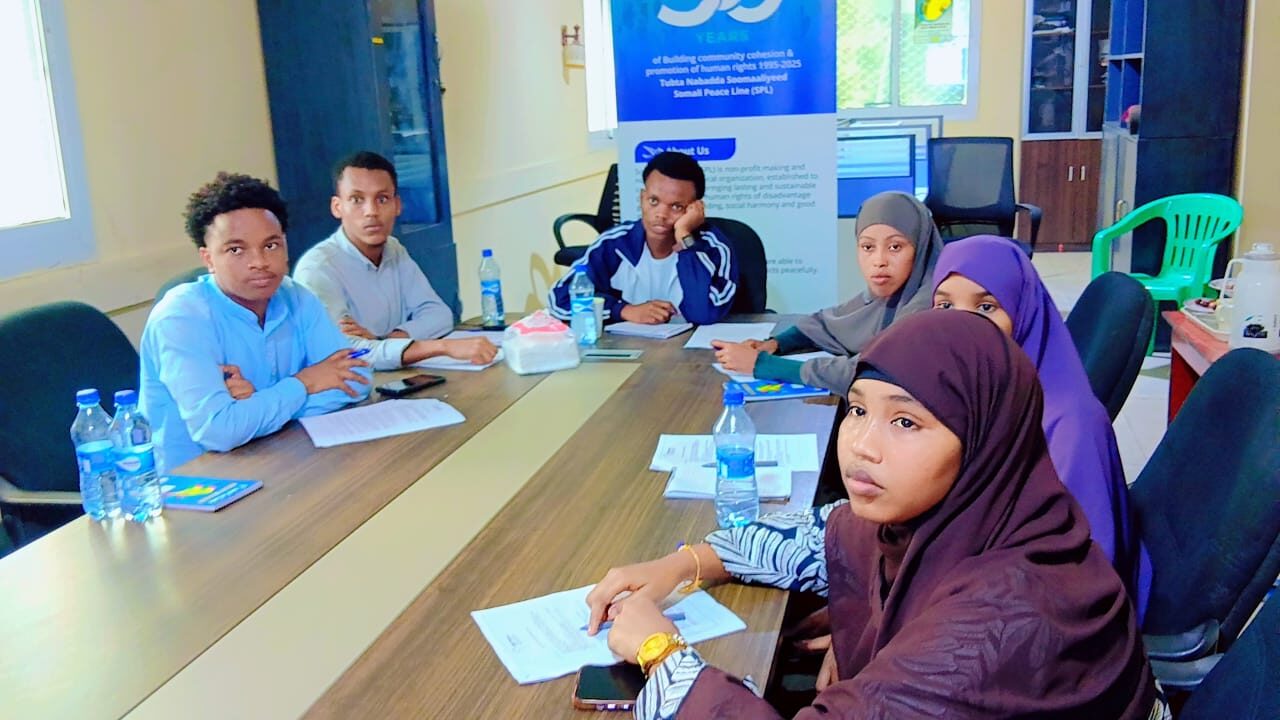
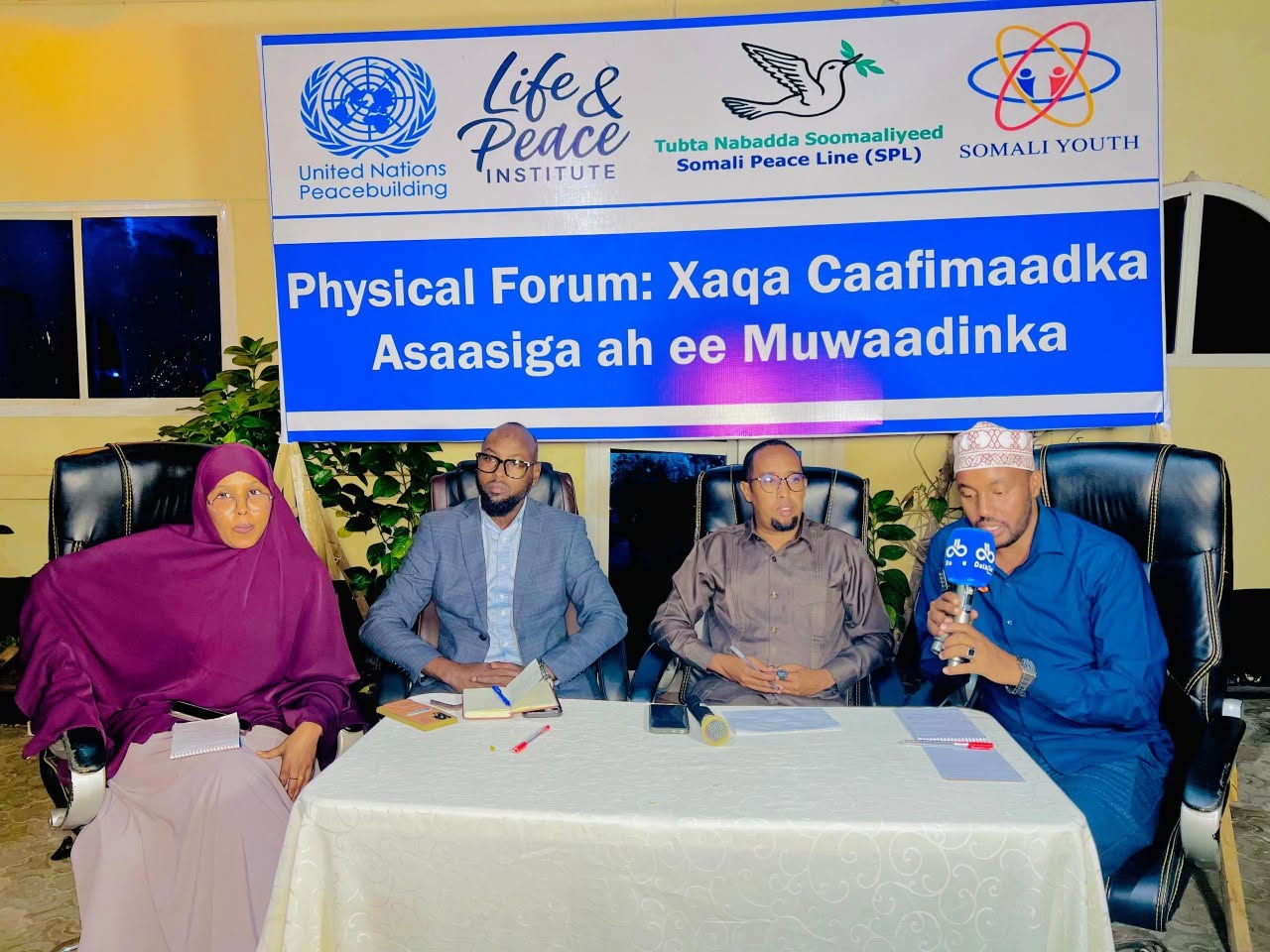
Somali Peace Line (SPL) is a local, non-profit, non-governmental organization founded in 1995 following the Second International Congress of Somali Studies in Paris, France, which focused on the “Culture of Peace in Somalia.” SPL is
committed to fostering lasting and sustainable peace, advocating for the rights of disadvantaged groups, strengthening the capacity of key social actors,promoting social harmony, and advancing good governance. With co-funding from the European Union, SPL is implementing a 36-month Action titled “Building CSOs’ Agency for Advocacy and Social Accountability – Danjire Project.” This EU-funded initiative operates in the HirShabelle and Southwest states of Somalia, specifically targeting the towns of Jowhar and Baidoa.
The primary objective of the Danjire Project is to enhance the capacity of local Civil Society Organizations (CSOs) to engage in policy dialogue, advocate for community needs, and participate meaningfully in governance processes. The
Action aims to strengthen CSOs as key actors in governance, policy dialogue, and social accountability at the community, district, and state levels addressing challenges such as weak citizen participation, limited accountability structures,
and capacity gaps within Somalia’s federal member states.
2. Purpose
To assess the performance, results, and sustainability of the Danjire Project, SPL is seeking a qualified consultant firm to conduct a comprehensive Endline Evaluation of the Action, covering the full implementation period from January
1, 2023, to December 31, 2025.
3. Objectives of the Evaluation
The evaluation aims to:
• Assess the continued relevance and coherence of the Action in relation to
EU priorities and national frameworks
• Measure the effectiveness and achievement of planned results
• Analyze the impact on governance, participation, and service delivery
• Examine the efficiency of implementation and resource utilization
• Evaluate the sustainability of capacities, networks, and accountability
mechanisms
• Review the inclusion of gender, youth, and persons with disabilities
• Assess the performance of monitoring, evaluation, and learning systems
4. Scope of the Evaluation
The evaluation will cover all activities implemented in Baidoa and Jowhar during
the project period. It will focus on:
• CSO capacity strengthening
• Policy dialogue and social accountability
• Governance engagement
• Disability and gender inclusion
• Community participation
Key stakeholders include SPL staff, CSOs, civil society networks, community
platforms, government institutions, and selected service providers.
5. Evaluation Criteria
The evaluation will apply the OECD-DAC criteria, including:
• Relevance and Coherence: Alignment with stakeholder needs, national priorities, and EU governance objectives
• Effectiveness: Achievement of outputs, outcomes, and targets; identification of enabling and limiting factors
• Impact: Observable changes in governance engagement, policy influence, and service delivery
• Efficiency: Use of resources in relation to results achieved
• Sustainability: Likelihood of continued benefits beyond the project period
6. Methodology
The evaluation will use a mixed-methods approach, including:
6.1. Desk Review: Project documents, reports, policies, and frameworks
6.2. Quantitative Methods: Endline survey across both locations, with statistical analysis
6.3. Qualitative Methods: Key informant interviews, focus group discussions, and case studies
6.4. Data Analysis: Triangulation of findings using thematic and statistical analysis
6.5. Ethical Standards: Informed consent, confidentiality, gender and conflict sensitivity, and inclusion of persons with disabilities
7. Deliverables
The consultant will be expected to submit:
7.1. Inception report and data collection tools.
7.2. Cleaned datasets.
7.3. Draft evaluation report.
7.4. Validation presentation.
7.5. Final evaluation report with executive summary
8. MANAGERIAL ARRANGEMENTS / ROLES AND RESPONSIBILITIES
The SPL MEAL team will take overall coordination of this Final evaluation with the successful consultant. Additionally, SPL MEAL focal person and project team will closely oversee the Final survey process and provide timely support
as required.
8.1. Support from SPL
Somali Peace Line will be responsible for the following:
• Share all necessary documents with the consultant to finalize the
methodology
• and data collection tools
• Community mobilization and making appointments with other key study
• participants
• Provide input for study methodology, data collection tools, and report.
• Guidance and coordination throughout all the phases of final evaluation,
• keeping communication with the consultants throughout all phases
• Review of the draft report
• Approve and sign the final report draft
8.2. The successful consultant will be responsible for the following tasks:
The consultant will design and conduct the Final evaluation and set out the benchmarks according to the project’s indicators considering regional variations and integration across themes. The consultant will also present the findings to Somali Peace Line
Specific tasks:
• Review of key documents that include the Final evaluation ToR, proposal
• documents, and the project log frame.
• Designing the Final evaluation Produce an inception report with a detailed work plan and methodology to be used,
• provide a description of how data will be collected including the sampling frame, data sources, analysis plan, and drafts of data collection tools such as questionnaires,
• submit and present these for review and agreement with the project team before the exercise.
• Develop an implementation plan for Standard terms of reference the fieldwork
• The consultant will prepare an evaluation matrix in-line with the project’s log frame
• Conduct training on the tool and sampling (including data protection and
• research ethics) for the enumerators and supervisors.
• Conduct field data collection, including supervision, quality control
• prepare a draft report and discuss with the project team the initial
results
• Produce final evaluation report with Final evaluation values (updated log frame) and other annexes (including but not limited to raw and clean datasets, data collection tools, sampling strategy, fieldwork plan, evaluation matrix)
8.3. The Project staff will
• Help with setting up interviews and meetings with stakeholders, thoughtransport and logistics will need to be organized by the consultant. SPLwill not be liable for any logistical support.
9. Key Qualifications and Competencies
Interested consultant firms should submit a proposal including:
9.1. Company/consultant profile and valid registration.
9.2. Proven experience in evaluating CSO/governance programs, preferably EU-funded.
9.3. Proposed methodology and work plan.
9.4. Detailed budget and cost breakdown.
9.5. CVs of key personnel, including Somali language capacity.
9.6. References and sample evaluation report.
9.7. Experience in fragile or conflict-affected settings is essential
10. Criteria Award
SPL is committed to a fair and transparent selection process. Proposals will be evaluated based on relevance, methodology, experience, cost-effectiveness, and team qualifications.
11. Timeline
Activity Date Invitation 9th November 2025
Deadline for the Submission 17th December 2025
12. Duration
The estimated duration of the Endline Evaluation will be 30 days, commencing from the date of contract initiation.
13. How to Apply
SPL invites qualified consultants or firms to submit their proposals to procurement@tubta.org, cc info@tubta.org, with the subject line: “Expression of Interest for Endline Evaluation of the Danjire Project (January 2023 – December 2025) – NDICI CSO/2022/437-606” no letter than 17th December 2025.